The brief
When Jaguar Land Rover wanted to launch the Defender virtually, a conventional website wasn’t enough. They wanted a world.
The brief called for a fully immersive 3D environment that captured the character of the Defender and created an experience around its launch.
The challenge was making that world accessible to everyone.
Why not a game?
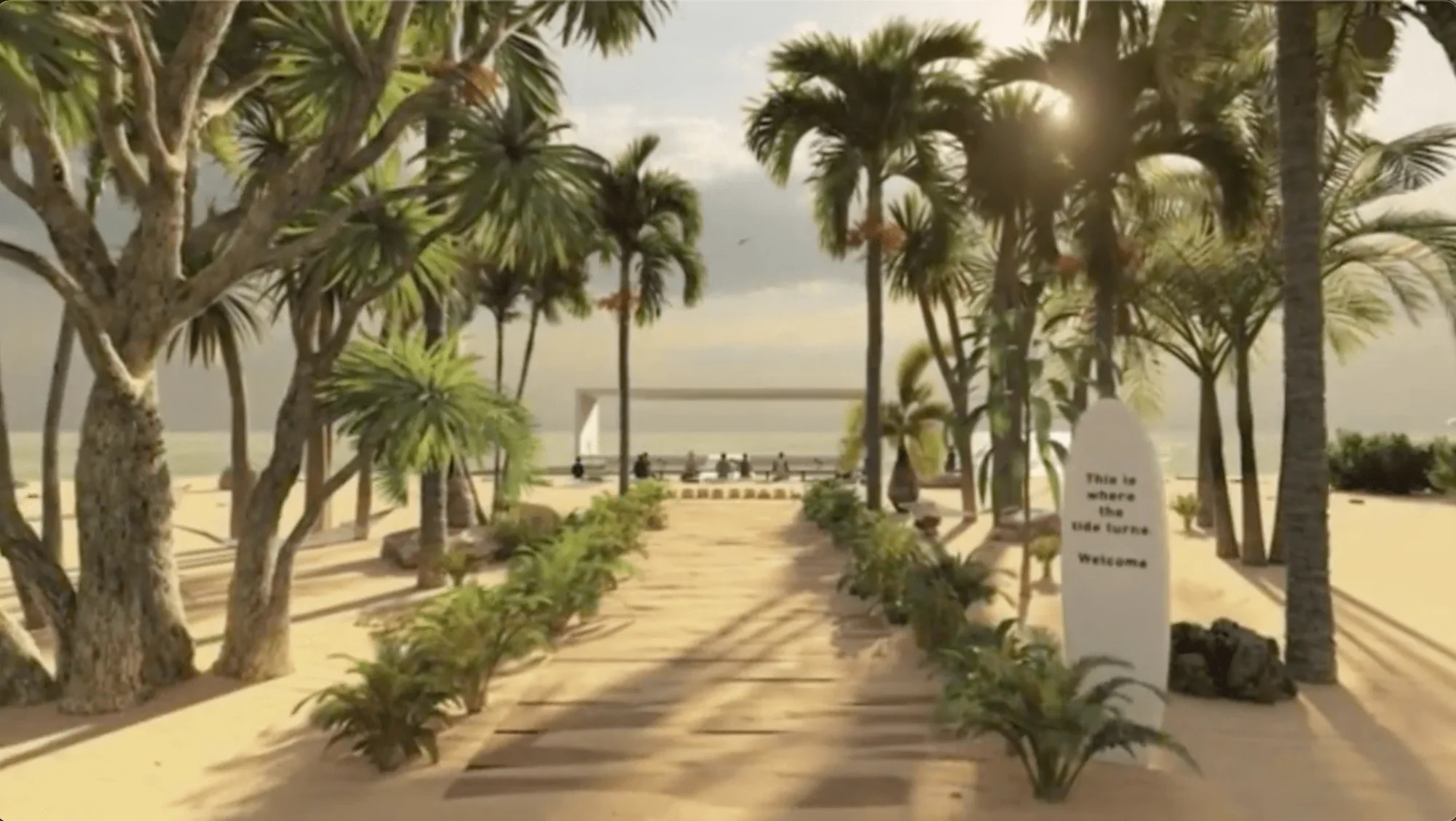
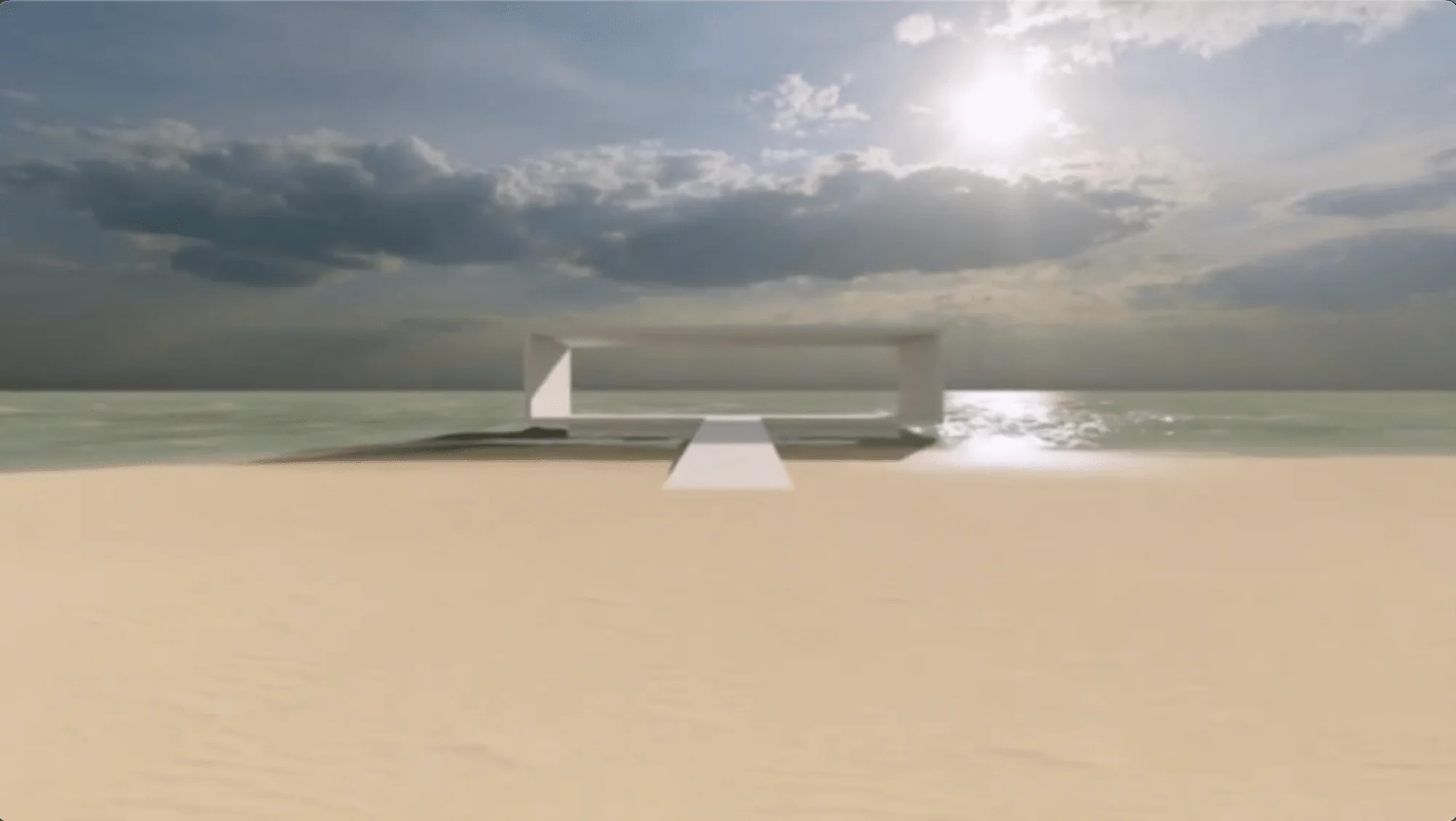
JLR had explored gaming companies for the project because game technology could deliver the visual depth and immersion they were looking for.
But a game introduces friction. It requires downloads, powerful hardware and a different kind of user behaviour.
For a global automotive brand looking to reach the widest possible audience, the browser offered a much more powerful distribution platform.
We built the experience web-native, combining real-time 3D with the advantages of the web: immediate access, broad device compatibility, measurable engagement and a familiar user experience.
The world
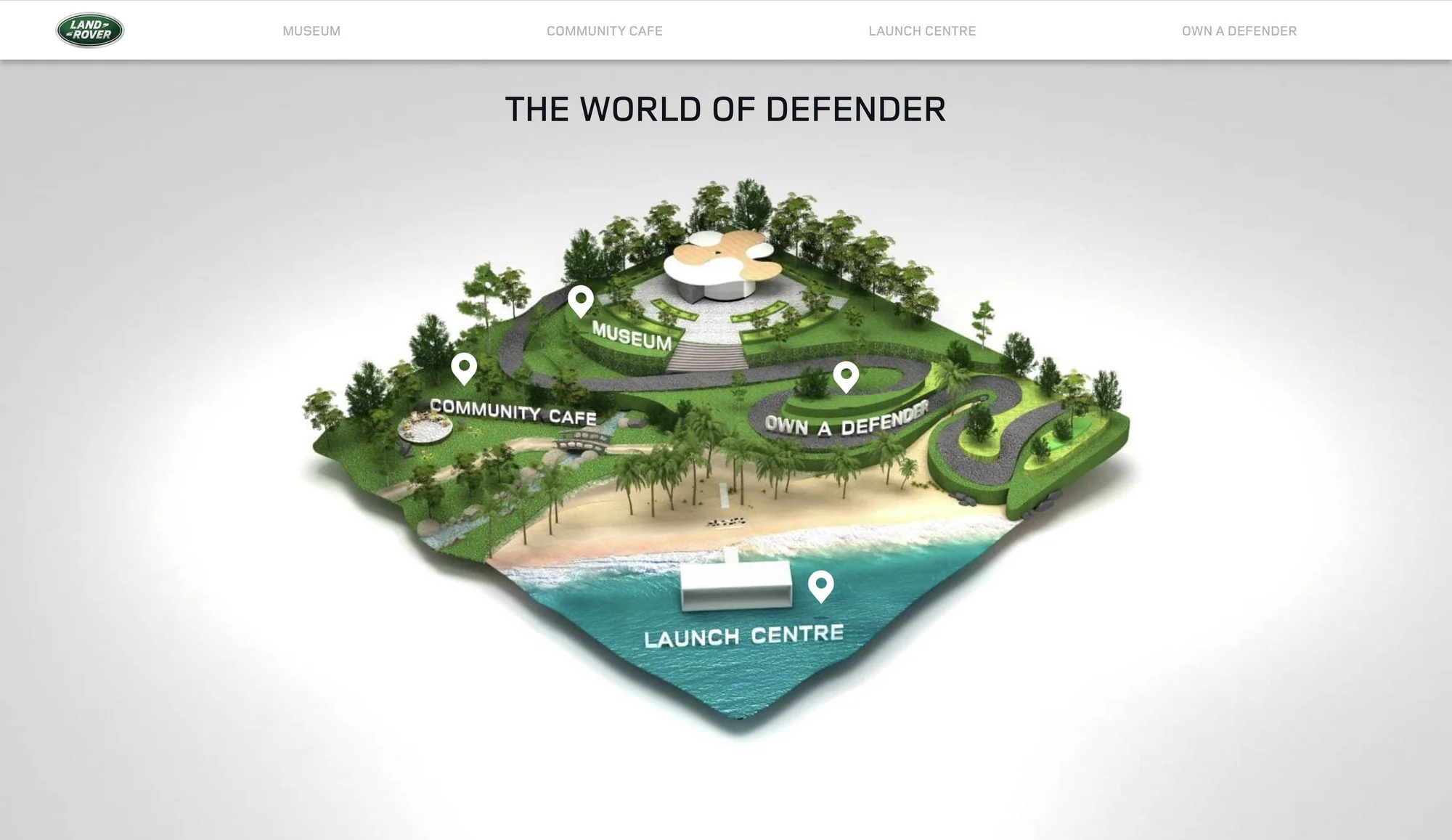
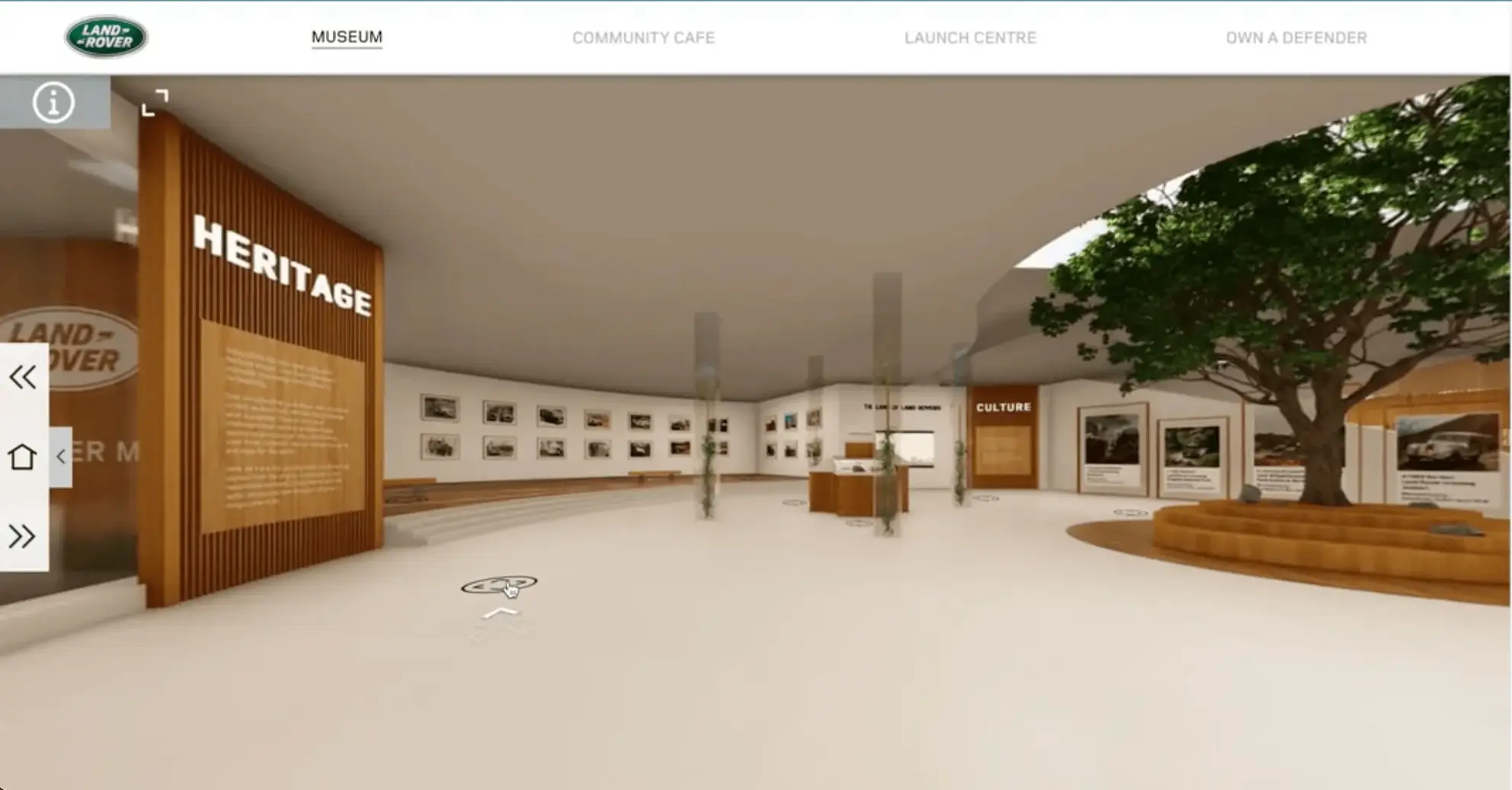
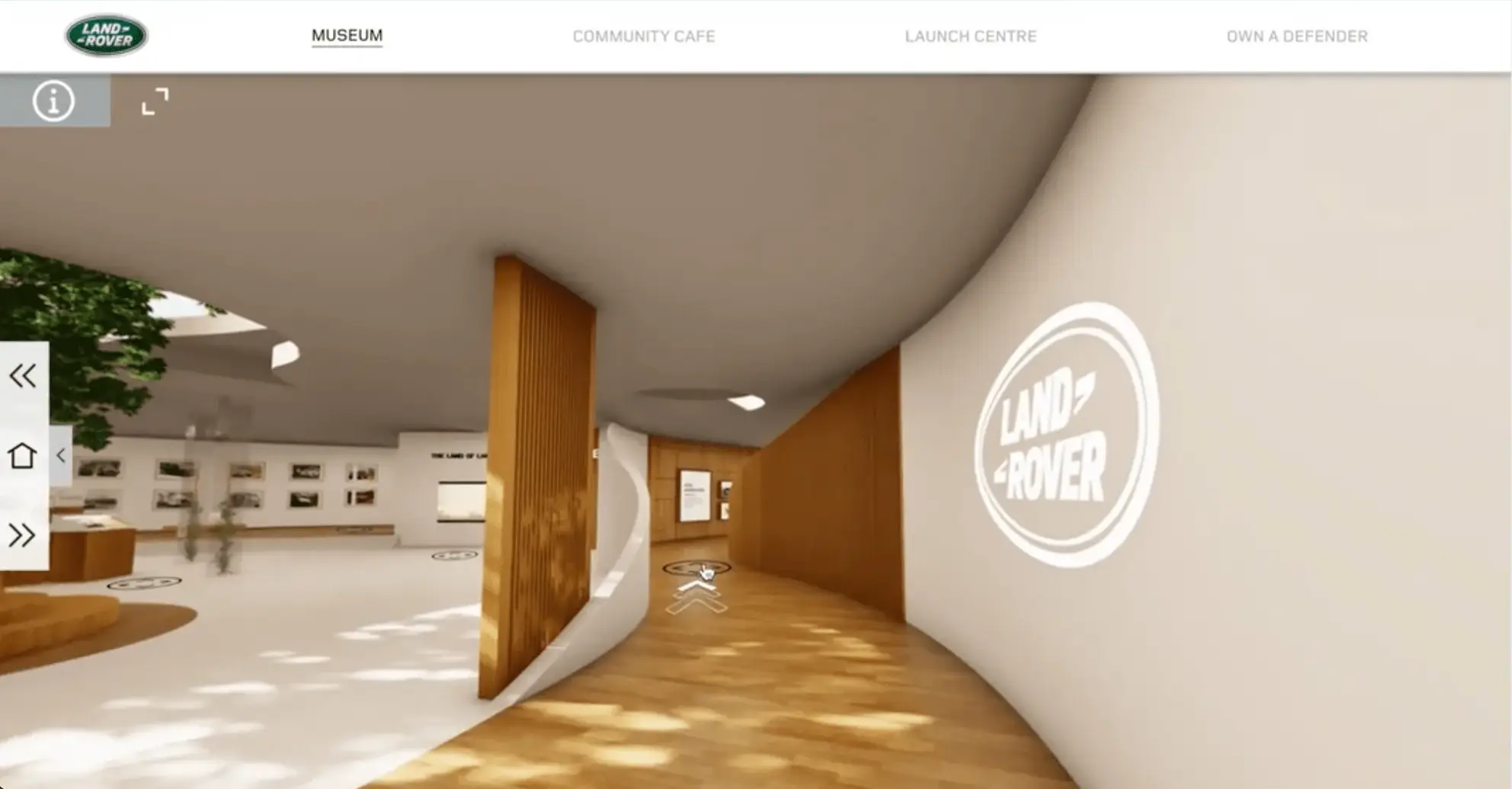
The experience was built around a 3D museum and launch environment.
Visitors could explore the world, discover the Defender and move naturally through the experience towards the launch. The reveal then transitioned into a virtual event environment where different audiences could access content relevant to them.
Media
Access to the virtual event, PR resources and launch material.
Guests
Participation in the launch experience.
Customers
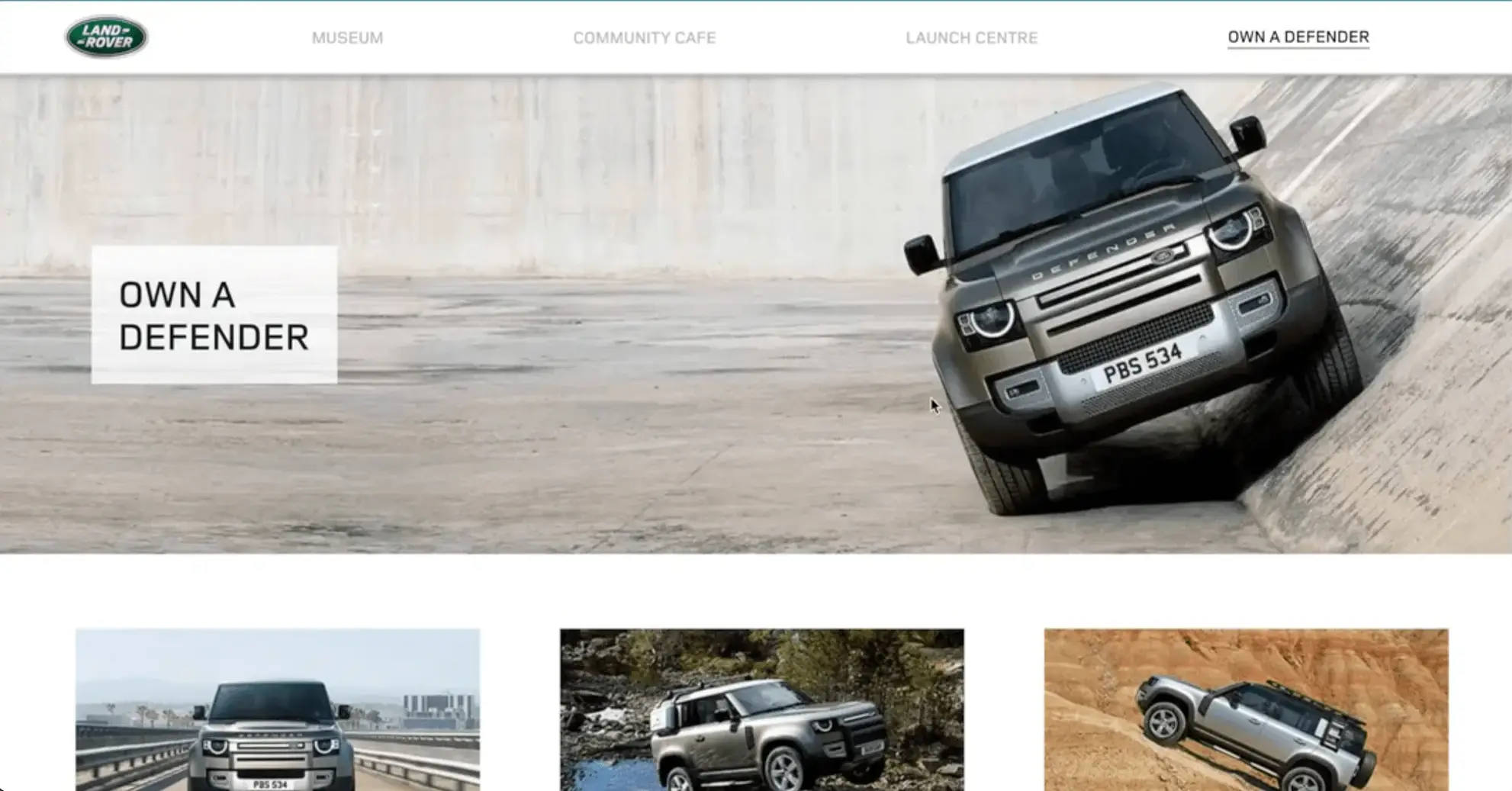
Exploring the Defender, with product information and specifications.
QR access
Connecting the physical and digital experience.
The journey
The experience was designed as a complete digital journey rather than a single launch moment.
- 01Explore
- 02Discover
- 03Launch
- 04Engage
- 05Learn
The 3D environment created the emotional experience, while the web platform handled the practical requirements around content, access and engagement.
The response
Extended for several months beyond the original launch.
The platform performed strongly enough that the client decided to extend the experience beyond the original launch period.
What began as a virtual product launch became a longer-running digital destination for the Defender.
The technology
The project demonstrated what becomes possible when real-time 3D and web technology are treated as one platform, rather than building a game and putting a website around it.
The result was an immersive automotive experience that could be entered directly from a browser, without asking the audience to install or learn anything new.